AP
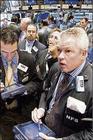
Traders gather at the post on the floor of the New York Stock Exchange that handles Morgan Stanley and Wells Fargo, Wednesday, September 17, with anxieties about the financial system still running high even after the government bailed out the insurer American International Group Inc.
Dorlan Francis, Contributor
After the end of World War 1, the world, led by the United States, embarked upon one of the greatest economic expansions of all time. With the advent of new technologies - washing machines, dishwashers, radio, chemical products and the automobile-the world went to work building products that people needed to sustain their lives.
The automobile caused expansion in oil exploration and development, gas stations, roads, highways and bridge building, motel and hotel industries. By so doing, much money was made and people prospered. This order-making money by making things is significant and should be remembered.
The financial crash that put an end to the 'roaring 20s' was not the result of the classical boom and bust of the capitalist economy. The bust that usually followed the boom occurred because of inflation. This happened because people who are prosperous demand more things. Commodities and raw materials may become scarce and cost more. Labour might become scarce and cost more and the production capacity of factories might have peaked rendering them unable to meet the demand. This dearth in supply causes prices to rise. Monetary authorities respond to this by tightening up on credit in the hope that this will curb demand. They raise interest rates. This is a delicate balancing act and instead of a soft landing, a hard crash might occur resulting in a bust. This is not what occurred to put an end to the roaring 20s and herald the Great Depression.
UNBRIDLED GREED
The Great Depression occurred because of unbridled greed and the belief that wealth could be created from thin air. This thinking emerged from Wall Street in general and the stock market in particular. The stock market in its original form was not a bad concept. It was good to know that when an entrepreneur created a business or when an individual bought into a business idea and provided capital to help make the idea a reality, there was a place to sell shares in the business.
The original concept of a stock market was meant to be like a food market. The farmer grows cabbage for sale at the market, where housewives purchase the cabbage. The housewife takes the cabbage home and prepares it as a meal for her family. That is how markets are meant to work; the producers of goods or commodities can go to a place where they can meet with end-users of their products.
These end-users add value to these products and sell them in a different form or consume the product in the present form. The stock market and commodity futures market (like the market for oil) has bastardised this process.
Instead of selling to end-users who add value and resell or consume, they sell and resell in the hope that wealth will be created from thin air and lucky timing. Just imagine the farmer with the cabbage who sells it to a housewife who then resells it to someone who resells it. Pretty soon the cabbage starts going bad and someone is going to be left holding a rotting cabbage.
HUGE PROFITS
AS a result of the prosperity of the roaring '20s, companies like RCA, Westinghouse, Ford and Chrysler made huge profits and their stock soared. The stock market in general soared. The stock market moved from 60 in 1921 to approximately 400 by 1929. People were of the view that the stock market could only go up! As a result, people mortgaged their houses to buy stocks. Those who could, bought stocks on margin (that is they paid down 10 per cent for the value of the stock they acquired). And the cardinal sin of all, banks were lending money not for productive use, but for the buying of stocks. Banks also used the money they had on deposit to purchase stocks.
On October 24, 1929, stock prices began to fall. Millions of shares were sold and the stock market dropped over four billion dollars. On October 29, 'Black Tuesday', the stock market crashed. On that day, 16 million shares of stock were sold and the stock market fell over $14 billion. On Black Tuesday, the ticker tape system that was used to record the sale of stock was overwhelmed and the system froze as everyone panicked and wanted to flee the market at the same time. The stock market wouldn't recover for another 22 years! Black Tuesday represents the day that the Roaring '20s ended and the Great Depression began.
What caused the Great Depression? The bankers who saw the stock market as a casino, rolled the dice and lost, then went bankrupt. Bankers were not able to provide the credit the economy needed to thrive. In a desperate bid to survive, they foreclosed on mortgages used as collateral to buy stocks; they even called in performing business loans. The credit deprivation, caused by the failure of the stock market, was the main cause of the Great Depression.
Dorlan H. Francis is a chartered life underwriter and a certified financial planner.